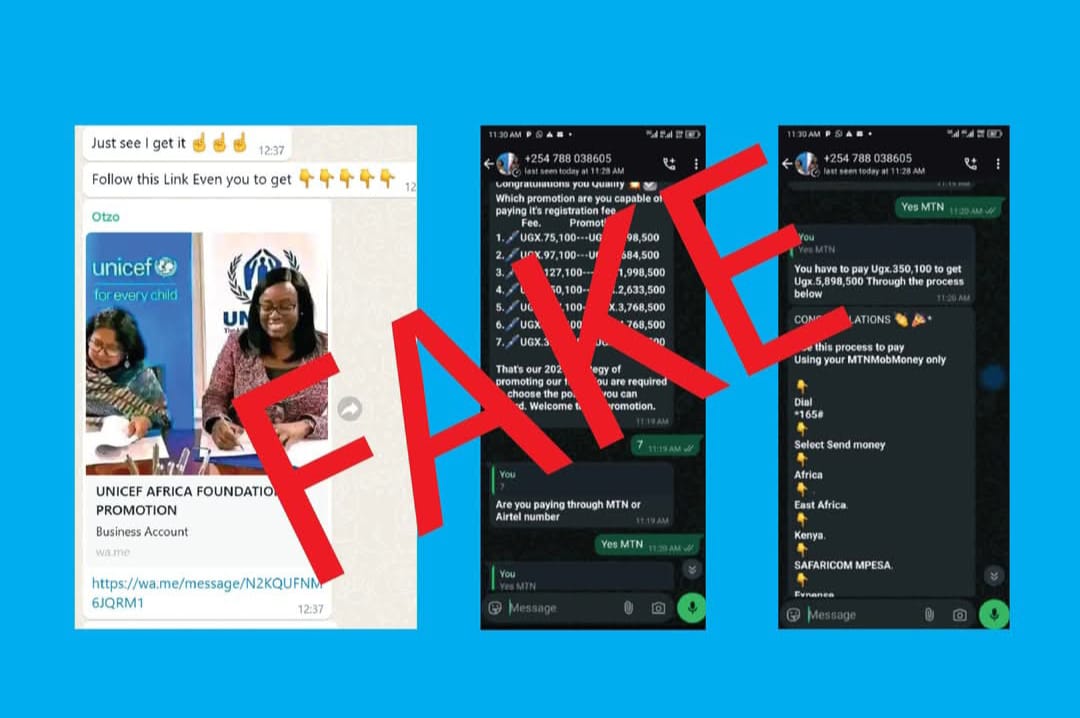
In recent times, social media platforms in Kenya have been buzzing with posts about a supposed UNICEF promotion offering cash grants or loans to individuals.
However, it’s crucial to clarify that UNICEF promotion is not real and is, in fact, a scam designed to exploit unsuspecting individuals.
Table of Contents
The Nature of the Scam
The fraudulent promotion uses the reputable name of UNICEF (United Nations Children’s Fund) to lend credibility to its claims. Here’s how it typically operates:
- Fake Social Media Accounts: Scammers create or hijack accounts on platforms like Facebook, naming them something akin to “UNICEF Foundation Promotion” or “UNICEF African Foundation.” These accounts post about a cash giveaway or loan program.
- Misleading Messages: Messages or posts claim you can receive substantial amounts like Kshs 65,000 for merely engaging with the promotion or providing personal details. They often include screenshots of supposed M-Pesa notifications to seem authentic.
- WhatsApp Contact: Participants are directed to contact via WhatsApp or are asked to send private messages to learn more or to claim their “winnings.” Here, they’re either asked for upfront fees to process the payment or for personal information, which can lead to identity theft.
- No Official Endorsement: UNICEF has explicitly stated through its official channels, including warnings on their verified X (formerly Twitter) account and official websites, that no such promotion exists. They’ve advised the public not to engage with these fraudulent offers.
Why UNICEF Promotion Is Not Real
Several factors confirm this promotion as a scam:
- UNICEF’s Official Stance: UNICEF Kenya has issued fraud warnings, emphasizing they do not run promotions or offer loans through social media or WhatsApp. They only communicate official news through verified channels.
- Lack of Official Documentation: There are no announcements, press releases, or mentions on UNICEF’s global or Kenya-specific websites about this promotion.
- Poorly Crafted Messages: These scams often contain grammatical errors, use unprofessional language, and the communication style does not align with UNICEF’s formal communication protocols.
- Request for Money: Legitimate organizations do not ask for payment or personal details to receive aid or grants.
Protecting Yourself
To avoid falling victim to this and similar scams:
- Verify Through Official Channels: Always check with UNICEF directly through their official website or social media accounts before believing any promotional news.
- Be Wary of Unsolicited Offers: If you didn’t sign up for something, be skeptical of any offer that comes out of the blue.
- Never Pay to Win: No legitimate grant or promotion requires payment to claim a prize or benefit.
- Guard Your Information: Never share personal or financial details without verifying the legitimacy of the requester.
- Report and Alert Others: If you encounter these scams, report the accounts or posts to the platform and inform others, especially those in your community, to prevent further victims.
Conclusion
The UNICEF promotion scam is just one example of how fraudsters exploit the trust people place in respected organizations. By staying informed, vigilant, and skeptical of too-good-to-be-true offers, you can protect yourself and help others avoid these deceptive practices. Remember, UNICEF supports children and families through official channels and does not run cash promotions or offer loans through social media scams.
About The Author

Leave a Reply
You must be logged in to post a comment.